I write this as a present-day reality check for Ugandans who are watching Dubai and Abu Dhabi as job destinations.
I see clear chances and real risks for people leaving home to find work. A recent Economic Research Forum report says migrants made up almost 70% of the workforce across the gulf last year. That scale shapes pay, bargaining power, and daily treatment.
The Labour Rights Index 2024 gives the united arab emirates a 55.5 score for basic access to decent work, while Qatar scores lower. These numbers show where headline abuses sit beside quieter harms like delayed wages, unpaid allowances, and short contracts that pressure workers.
I explain who is arriving, which sectors hire most, common visa and sponsorship snags, and where exploitation shows up. This is an informational, news-style explainer based on recent reports and worker testimony, not a guarantee of any single outcome.
For process questions, contact Albarshra Recruitment Agency — Call/WhatsApp +971557317941 or email info@albarshra.com.
Key Takeaways
- Large migrant share in the gulf affects worker power and pay.
- united arab emirates shows basic access to decent work, per 2024 index.
- Both headline abuses and subtle exploitation matter for jobseekers.
- Many arrive for entry-level roles; sector and contract type vary risk.
- Practical checks and safe recruitment steps can reduce harm.
- Contact Albarshra for direct questions about hiring and visas.
Why I’m Reporting on African Migration to the UAE Right Now
Major televised events have forced tough questions about labor standards across the Gulf onto the global stage.
I write this because that attention affects how people in Uganda discuss moving for work today. Big projects have shown how conditions can vary and why clear, practical advice matters for anyone planning to travel.

How big events pushed labor issues into view
High-profile builds drew scrutiny after rights groups said some sites were completed under conditions similar to forced labour. That scrutiny made the world ask how workers are treated across the middle east.
What the numbers and reports say
Research and rights reports keep repeating large percentages. Human Rights Watch estimated 95% of Qatar’s workforce were migrants in 2019. The Economic Research Forum found migrant labourers were almost 70% of the workforce across Gulf countries last year.
- I explain why I focus on this now and what it means for readers.
- I note that the key question is not only the number of migrants but what happens to them over years on pay, housing, and mobility.
African workforce in UAE: Who’s Coming, Where They Work, and Why
Stories from current arrivals show why some accept risky short-term work for steady cash.
I see many people from several countries drawn to low-paid roles where demand stays high. The main sector entry points are construction, security, domestic work, and hospitality.
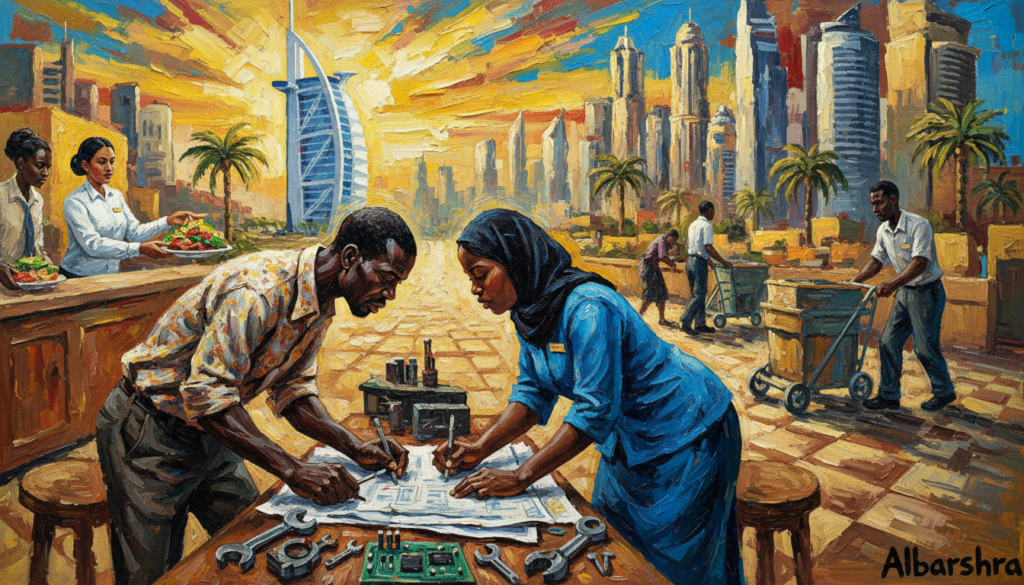
Why people still travel: faster income than local options, support for families, and a chance to rebuild after job loss. These reasons often outweigh known risks.
“I used a two-month visitor visa to hunt for a job and moved through short contracts before I found a permanent role,” says Felicitas, a worker now in Dubai.
Counts are unreliable because many migrant hires are temporary, irregular, or unregistered with embassies. For more context on migrant flows, see this overview at migrant workers in the United Arab.
| Role | Typical risks | Who is most affected |
|---|---|---|
| Construction | delayed pay, short contracts | men, short-term hires |
| Domestic work | isolation, violence, passport issues | women, private-hire |
| Hospitality & Security | high turnover, low bargaining power | young workers, seasonal |
Practical note: short contracts turn time into a pressure point—visa status can change after months. If you are considering travel, verify offers and ask questions. For process checks, contact Albarshra Recruitment Agency — Call/WhatsApp +971557317941; Email: info@albarshra.com.
Working Conditions in the United Arab Emirates: What Reports Say in the Present
I looked at recent reports to see how daily working conditions match formal scores of labour protection.

Indicators and what they miss
The Labour Rights Index 2024 gives a 55.5 score for basic access to decent work. That number suggests some legal protections exist but does not show how they play out for individuals day to day.
Common complaints that appear in cases
Delayed pay, wage theft, and unpaid allowances are the issues most often raised. These patterns quietly strip a worker’s ability to save and plan.
Housing pressures
One Migrant-Rights.org restaurant report describes salary delays up to three months. The same case noted cramped rooms with ten people and up to twenty sharing cooking and washing facilities.
Health and safety at work
A hotel case shows overtime, injuries, and medical treatment that did not restore full health. Even when employers cover hospital bills, long-term harm and limited recovery remain real risks.
- Signals I look for before accepting an offer: written pay terms, clear overtime rules, housing details, and formal complaint channels.
Discrimination and Social Division: What I Hear Most Often From Africans in the Region
What stands out most in conversations is how quickly stigma shapes daily life and job chances.
Felicitas, who is Kenyan and works in Dubai, tells me she faces open suspicion and small humiliations that add up. She says communities often live apart and that she rarely meets Emirati citizens socially.
How stigma shows up:
- Being labelled “cheap labour” at shops or workplaces.
- Denied front-facing roles despite qualifications.
- Unequal pay for the same tasks, as both Felicitas and Joseph report.
Everyday effects on jobs and living
Racialization shapes who gets visible shifts and who works late, hard hours. That directly affects earnings and promotion chances for many workers.
Segregated housing limits mixing across nationalities. This narrows networks and means people rely on fellow countrymen for referrals and emotional support.
“I was passed over for a front role even though I had the certificate,” says Joseph.
Practical steps I suggest
Document incidents, compare pay offers carefully, and choose employers with clear HR and grievance channels. These moves do not erase prejudice, but they help protect rights and increase chances of fair treatment.
| Issue | What I see | Action |
|---|---|---|
| Discrimination | Lower pay, fewer promotions | Document pay, seek written terms |
| Segregation | Separate housing and limited mixing | Build wider networks, use community support |
| Daily stigma | Humiliating moments and suspicion | Record incidents; report if employer policy exists |
Rules, Visas, and the Sponsorship System: Where Many People Get Stuck
Rules around visas and sponsorship often decide how much freedom a person really has once they arrive.
I explain the sponsorship logic plainly: when a worker’s legal status depends on an employer, mobility and bargaining power shrink. That dynamic appears in regional research and rights reporting.
How sponsorship shapes mobility and bargaining power
The Carnegie analysis and rights groups show that kafala-style ties can create dependency even after reform is announced. A migrant who needs the sponsor’s permission to change jobs has less leverage during disputes.
Recruitment risks and common deceptions
Recruitment can bring real harms: fake offers, shifted job descriptions, and hidden fees that push people into debt. Joseph’s regional example describes interviews for jobs that did not exist and growing distrust of agencies.
Overstay penalties and short contracts
Short contracts add pressure. Felicitas’s story shows how visa expiry and daily fines forced her to pay penalties over several months before she secured stable work.
What transparency looks like from a worker’s view
- Written contract before travel.
- Fee breakdown and salary, including overtime, in writing.
- Housing terms and a clear grievance process without retaliation.
| Issue | What happens | Worker fix |
|---|---|---|
| Sponsorship control | Limits job change | Ask for transfer rules in writing |
| Recruitment deception | Non-existent roles, hidden fees | Request written offer and receipts |
| Overstay fines | Daily penalties, stress | Check visa length and renew options early |
I flag that government rules matter, but enforcement shapes daily life. If you want help clarifying visa categories, job matching, or documentation before payment, contact Albarshra Recruitment Agency — Call/WhatsApp +971557317941; Email: info@albarshra.com.
COVID-19 and After: Job Loss, Unpaid Wages, and What Recovery Looks Like
In a matter of weeks the pandemic erased savings and forced people to hunt for new work far from home.
I saw how the covid-19 pandemic triggered sudden terminations and income cutoffs that left many without options. Employers closed or paused hiring and people lost pay for months. That shock pushed some, like Felicitas, to search for jobs abroad after a contract at home ended.
One documented case from Migrant-Rights.org shows a gym worker who was let go after the pandemic hit. He received no salary or allowances, was told to move out, and then relied on charity. His embassy offered no clear support and he faced an uncertain legal status.
Unpaid wages after termination mean immediate pressure on rent and food. Without pay, people risk falling behind on paperwork and becoming irregular. Recovery takes more than a new job—it often means rebuilding savings and paying debts.
“I ran out of cash after two months and had to turn to neighbours and local charities,” a worker later told reporters.
What helps: small emergency funds, written proof of pay and terms, and knowing where your embassy can help. Informal networks often provide critical short-term support when government aid is limited.
| Impact | Example | Practical step |
|---|---|---|
| Immediate income loss | No salary for months | Save an emergency fund before travel |
| Housing pressure | Told to move out after termination | Keep contact details for community support |
| Legal risk | Unable to renew papers on time | Carry written contracts and receipts |
I advise readers from Uganda to plan for shocks. Keep copies of pay slips, ask for a written offer before you leave, and build a small safety fund. The after-period still carries pandemic-era vulnerabilities, especially for people in service roles where shifts can be cut quickly.
Conclusion
My clear advice: plan carefully, and treat offers with healthy caution.
I find that the united arab emirates offers real chances for people from Uganda, but it also shows repeated risks around pay, housing, and mobility. Some migrants reach steady roles; others face short contracts or delayed wages.
Watch-outs I recommend: verify the job, get offers in writing, check visa timelines, and act fast on any sign of wage delay or contract switching.
Final checklist: confirm salary and allowances, clarify housing and overtime, ask who pays fees, and keep copies of every document. For help on recruitment steps or paperwork, contact Albarshra Recruitment Agency — Call/WhatsApp +971557317941; Email: info@albarshra.com.